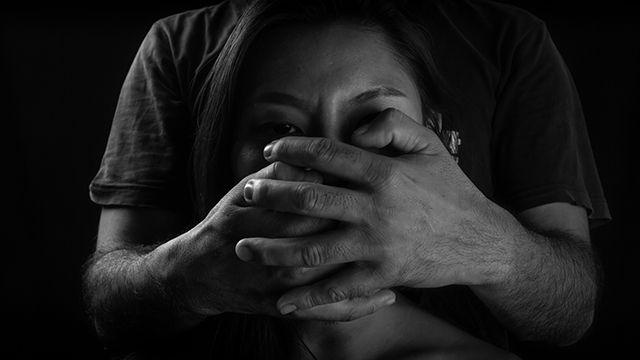
Have you ever heard of the National Register for Sex Offenders list? If not, let me tell you about it. It is basically a register, listing individuals who have been found guilty of sexual offences against children and disabled people. The National Register for Sex Offenders (NRSO) is established in terms of Section 42 of the Criminal Law (Sexual Offences and Related Matters) Amendment Act 32 of 2007 (The Sexual Offences Act).
But here is the thing: this register is not available to the South African public. This list is only available to employers, and not every employer, by the way, specifically those employers who work with children and disabled people. This is done for obvious reasons, which are to allow the employer to know the prospective employee they might hire and ensure they are fit and proper to work with kids. This is a great measure by the government to curb the high rate of sexual offenses against children and mentally disabled persons. But what about women and men who are sexually assaulted? Should their perpetrators be exempt from the register? In South Africa, a woman is raped every 12 minutes (Q3 Crime Statistics of 2023/24:SAPS). Why should the register only be available to employers and not the general public, and why should it exempt sexual offenders who harm adults?
The argument against publishing the NRSO to the public is that doing so would ‘violate’ the constitutional rights of the perpetrators. Section 14 of the Constitution states that ‘Everyone has the right to privacy, which includes the right not to have their person or home searched, their property searched, their possessions seized, or the privacy of their communications infringed’. Fears of making such a register public are that we, the public, might harm such individuals or doxx their homes. Now, for those who might not know what doxxing is, it is basically the malicious, non-consensual online publication of an individual’s private or identifying information, such as home address, phone number, or personal emails, with the intent to harass, threaten, or intimidate them. This is a valid concern, but in no way, shape, or form does it outweigh our right to know the people we live amongst.
When researching this issue, I came across a story of Leigh-Anne, a mother of a seven-year-old boy, who was repeatedly sexually assaulted for two years by a family friend. She also states that the NRSO should be made accessible to the public. She mentioned that “As a parent, you should have the right to know who your neighbour, your child’s teacher, or his friend’s parents are. After the trauma my son and our family have experienced, we no longer befriend anyone who is not willing to undergo a criminal check – we learnt in the hardest way possible that paedophiles are master manipulators and unfortunately you can’t trust anybody.” The sad thing about this story is that it could have been likely prevented had the mother known that such a person was a paedophile through the NRSO being made public to us, the general public, not only to select employers.
Countries like the United States of America have a public sexual offenders registry. They (public citizens) can at any time search individuals by name, zip code, or county, which helps residents, parents, and employers identify offenders in their communities. But as South African public citizens, we cannot do the same because the law is ‘protecting’ sexual offenders from us, law-abiding citizens, and it makes no sense. Do we not deserve to know who we trust with our kids, sisters, and brothers, whether that be in our neighbourhoods or our churches? Repeat offending, also known as recidivism, remains high in most countries, with rates typically of 40–60% within two years (Yukhnenko, Sridhar, & Fazel, 2019), but we are still being denied access to such records.
As South African citizens we have section 32 of the Constitution, Access to Information, which is given effect by Promotion of Access to Information Act [No. 2 of 2000], which states that, the right of access to information is done to foster a culture of transparency and accountability in both public and private bodies, and to promote a society in which the people of South Africa have effective access to information to enable them to fully exercise and protect all their rights. Yet, we are still being denied access to such information, even where the law provides that we should have access to information. The right to privacy for sexual offenders should be subject to section 36 of the Constitution, which is known as the Limitation clause. This clause states that ‘The rights in the Bill of Rights may be limited only in terms of law of general application to the extent that the limitation is reasonable and justifiable in an open and democratic society based on human dignity, equality and freedom, taking into account all relevant factors, including the nature of the right, the importance of the purpose of the limitation, the nature and extent of the limitation, the relation between the limitation and its purpose; and less restrictive means to achieve the purpose.’ This clause perfectly allows for the right to privacy of sexual offenders to be limited to the benefit of the community.
Making the NRSO public would by far produce more advantages to the community than disadvantages to the sexual offenders. The purpose of any type or any form of sexual offenders’ register is described as being ‘a form of public protection and not part of the punishment’ of being found guilty of the offence. It is important that the sexual offences register succeeds in its primary aim of protection, and not only made available to employers but also to the general public, who will benefit greatly from knowing who these people are. It will not eradicate rape or sexual harassment overnight, but it will definitely help us know and search the people we go out on dates with, get into relationships with, pray with, socialise with, and work with.
Making the National Register for Sexual Offenders public will greatly benefit us, especially as a country facing such high levels of sexual offending. Let’s fight for our voice to be heard! We deserve to know. Our rights should not end where their fear begins.